
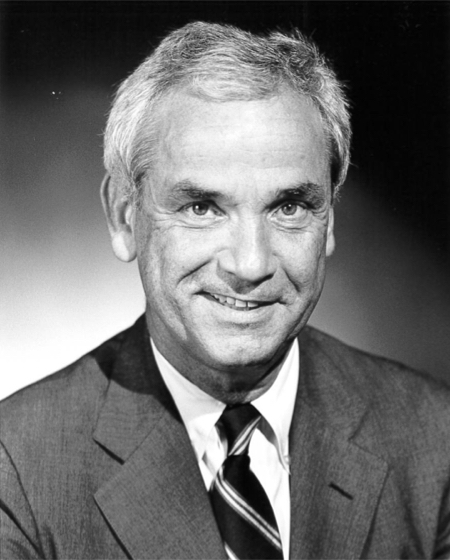
William Holt Williamson, III
August 1, 2026
CHARLOTTE, NC - William Holt Williamson, III, who passed away on August 1, 2026, was so proud of his roots as a Charlottean that his definition of “patriotism” included loyalty not only to the United States of America but to his native city and state as well.
Family members and close friends remember him both for his vocational success as an investment advisor and his avocational success as a golfer. Those familiar with his community leadership remember him for his extraordinary service to some of the region’s best-known civic and charitable organizations.
Known as “Bill Will,” to avoid confusion with a father and grandfather bearing the same name, he was born at Presbyterian Hospital on May 30, 1931, to William Holt Williamson Jr. and Martha Lee Williamson. Always proud of his longevity, he enjoyed reminding friends that the President at the time of his birth was Herbert Hoover.
Reflecting on the course that his life took over the years, he once said it could be divided into four distinct phases. His “childhood” phase was noteworthy, he remembered, for some of the challenges that occurred during the period of history when he grew up. These included the Great Depression, World War II-era rationing, and a number of nationwide epidemics for which no cures or vaccinations existed.
His “golfing” phase, during which life revolved around his passion for the game, started at roughly age 7 and ran to age 26.
His “investor” phase, during which he strove to perfect the skills that would sustain his professional life for decades, started up in earnest after age 26.
And he took special pride in the “philanthropic” phase of his life, which was apparent at every age but especially so during his later years. His primary goal as a philanthropist, he said, was “devoting time, talent and treasure to the organizations that were making a difference in a truly big way.”
Bill Will learned early on that starting life in a state of relative affluence is no shield from heartbreak. While only 13 years old he lost his mother to cancer and his father to an aneurism suffered during service as a lieutenant commander in the Navy during World War II. His father, Bill Williamson Jr., was a skilled pilot, assigned to the American embassy in Brazil, who spent the war years flying diplomats to and from nearly every country in South America.
Even at a young age Bill Will demonstrated a characteristic that would manifest itself many times in the future: an ability to overcome adversity in a positive manner. After the loss of his parents, he lived under the guardianship of his father’s sister, Sarah Williamson Everett Lamb, who cared for Bill Will and his late sister, Mary Martin Williamson Borden.
After attending junior high school for a time in Rockingham NC, he transferred to Episcopal High School (EHS) in Alexandria VA. The move fulfilled his father’s aspiration that Bill Will attend EHS, but it short-circuited his own aspiration to play scholastic golf. Having no opportunities to play at Episcopal, he moved back to Charlotte and enrolled at Belmont Abbey Prep.
“I think I may have been the only Protestant there,” he said, “but the good fathers played an important role in my growth and indulged my passion for golf. They even looked the other way when I hitchhiked down Wilkinson Boulevard to play golf at Charlotte County Club.”
Bill Will’s father had first introduced him to golf at the age of five, based on a conviction that “golf was a game you could enjoy your entire life.” That sentiment proved to be remarkably prescient. Many years later, when he was a student at UNC-Chapel Hill, Bill Will garnered All-American status in the sport he had learned to play at such a young age. The honor came following a runner-up finish at the 1953 NCAA national championship. He completed the work for his bachelor’s degree that same year, with a major in business economics.
His subsequent golfing achievements included winning the Charlotte City Amateur and multiple club championships at both Charlotte and Quail Hollow County Clubs. He played in and won many other amateur golfing events throughout the country.
In the process, he had a chance to rub elbows with some of the preeminent golfers of the 1950s and 1960s. His personal favorites were golfing icons Ben Hogan, Byron Nelson and E. Harvie Ward. (Ward, whose name is not as well-known, won back-to-back U.S. amateur championships and coached Bill Will at UNC.) One of the highlights of the “golfing phase” of his life was seeing his idols play in person at the Charlotte Open PGA.
Despite his idolization of Hogan and Nelson, Bill Will said the best golf pro he ever saw was the athlete who literally defined golf success in the late 20th Century: Jack Nicklaus. Bill Will qualified for the National Amateur Tournament five times, the last time being in 1959, when he carried Nicklaus to the 17th hole. Falling behind as he played those final two holes, Bill Will endured the same fate as some of the world’s best golfers. Even late in life, however, he never failed to take delight in remembering the match that almost was.
Bill Will’s level of talent was such that he played on the PGA Winter Tour Circuit after graduating from college and completing a two-year stint in the Army. During this period, in fact, he played as an amateur in seven different PGA events. Ultimately, however, he put aside his dream of being a golf pro when other priorities intervened.
He wanted to spend more time with his autistic son Holt, and he needed to devote more time to the correspondence courses he was taking to learn more about his new passion: managing investments.
His career in that field took off quickly, thanks to the mentorship of a well-known Charlotte stockbroker named Ralph Van Landingham Jr. Van Landingham recognized early on that Bill Will possessed two qualities necessary for success in the financial services industry. He had developed a knack for picking stocks, coupled with an extraordinary gift for salesmanship.
Accordingly, he started out in 1956 as a registered representative with Harris Upham, which later merged with Smith Barney. In 1962 he was appointed Resident Manager for Reynolds & Co., and three years later he became a General Partner at that firm. Reynolds & Co. was subsequently known as Dean Witter Reynolds, and then Morgan Stanley.
In 1985, while still at Dean Witter Reynolds, he started a second enterprise called Williamson Investors LP, one of North Carolina’s earliest hedge funds. After “retiring” from Morgan Stanley in 1996, he devoted all of his time to the hedge fund, which was transferred in 2000 to James Myers and in 2004 to Coy Monk of Afton Capital.
Bill Will was quick to say that running a hedge fund is not a job for the faint-of-heart; nonetheless, over time, his skill and determination contributed to a steady growth in assets from $3 million to over $30 million. Even after relinquishing control of the business, he remained active as a senior advisor at Afton Capital. He wore many hats there, including pro bono portfolio management for a number of charitable, educational and religious organizations.
While many investment advisors favor the diversification benefits provided by index funds, Bill Will always enjoyed the challenge of picking individual stocks. And he backed up his instincts with a dogged commitment to learning as much as he could about the businesses he was recommending and the people who were running those businesses. “When you’re dealing with Wall Street there are no guarantees,” he was fond of saying, “but the odds of success improve considerably when you do your homework.”
Overall, he attributed his success in investing to the same characteristics he had cultivated as a golfer: competitiveness, resilience and intense preparation. “Golf and investing have a lot in common” he used to say. “Neither is a team sport. Whether you’re swinging a club, or making a buy/sell decision, it’s all on you. You have to be able to handle adversity and not let it destroy you if you make a mistake. You have to admit the mistake, get over it quickly and move on. The piece that many people struggle with is getting over it quickly.”
Early in his investment career Bill Will had another key mentor, an uncle named Martin Lee, who emphasized the importance of community service. At the time Bill Will completed his military service, Uncle Martin was serving a term as President of the newly created Charlotte Arts Fund (which later became the “Arts & Science Council” or ASC). Lee quickly enlisted his nephew to help raise funds. That early experience propelled him into a series of involvements with some of the city’s best-known and most impactful non-profit organizations.
Over time, Bill Will served as the President or Chair of many different organizations, including ASC; Alexander Youth Network; Mint Museum of Art; Spirit Square; Charlotte Mecklenburg Art Commission; Greater Charlotte Cultural Trust; and St. Peters Episcopal Church Endowment.
His board positions included Charlotte Opera; Duke Mansion; Central Piedmont Community College Foundation; McColl Center for Visual Arts; Daniel Stowe Botanical Garden; Foundation for the Carolinas; and St. Peters Hospital Foundation.
In recognition of his service to the Daniel Stowe Botanical Garden, the orchid conservatory there was named in his honor in 2022. It is now known as the “William H. Williamson III Orchid Conservatory.”
Having fiduciary responsibility for these types of organizations is no simple task; it requires active oversight, policy guidance and strategic planning. In addition, most charitable boards expect members to donate generously and encourage others to do the same. Bill Will had extraordinary success in this regard. “Fundraising makes some people uncomfortable,” he once said, “but I wasn’t intimidated by the process. The organizations I served needed people who could ask for the big gift and not back away. I was fine with that.”
While some business leaders seek out charitable assignments as résumé builders, or simply accept them as an inevitable expectation, Bill Will was driven by a self-proclaimed “patriotic desire” to make his city and state better.
“He was, quite simply, a force for good,” one fellow board member recalls. “He was a giver, not a taker, and that was apparent in everything he did.”
Those familiar with his fundraising success have estimated that over $100 million was raised in the campaigns he led over the years. Equally significant, however, was the quiet work he did behind the scenes to provide help where help might be needed. “An awful lot of his impact occurred through actions that don’t show up in a biography,” one friend said. “You can look almost anywhere in Charlotte and find a person whose life trajectory was altered for the better because Bill Will intervened at a critical time. It may well be that the bigger part of his impact actually came from actions that fell below the radar.”
In addition to his philanthropic work, Bill Will held leadership positions in a number of clubs and organizations related to personal and professional interests. These included the Southern Golf Association, the U.S. Seniors Golf Association (USSGA), Charlotte County Club, Quail Hollow Club, Linville Golf Club and the Union League Club of New York. He also served as Vice President of the Bulls Investment Association and President of the N.C. Security Traders Association.
In 2022, after 30 years of involvement in USSGA, he was accorded the organization’s highest form of recognition, the William C. Campbell Award. It is given annually for outstanding service to USSGA and outstanding lifetime achievements as an amateur golfer.
Other noteworthy recognitions during his lifetime included Charlotte News “Man of the Year” (1976), “Order of the Long Leaf Pine” (2012), and the “A.E. Finley Order of Merit,” given for outstanding support of the golf programs at UNC-Chapel Hill.
Finally, friends remember him as a dedicated family man who is survived by two children from his first marriage to Jane Fearing Williamson. He was a loving, patient and compassionate caregiver for his autistic son Holt, who is currently retired and living in Charlotte. Bill Will’s daughter CeCe, who resides in Ocala, Florida, is a University of Virginia graduate widely known and respected for her professional work in youth development and her personal achievements in horsemanship.
He is also survived by his second wife, Patricia Shaver Locke Williamson, to whom he was married for 45 years. Bill Will and Pat met when she was working to develop the Spirit Square Arts Center, and he was raising funds to support the same initiative. Pat was serving on Charlotte City Council at the time, and in that capacity represented the city on Spirit Square’s governing board.
Bill Will never hesitated to say how blessed he was to have a “fantastic marriage” with Pat, and a relationship that was “terrific in every respect.” He felt particularly fortunate that Pat was able to accompany him on trips around the world, thanks to a series of excursions led by the late Dr. Billy Wireman, who served as President of Queens University of Charlotte from 1978 to 2002.
“I liked to tell people,” he once said, “that I got my bachelor’s degree from Chapel Hill and my MBA traveling with Billy.” He described the excursions as “cultural and educational highlights,” which included visits with heads of state (such as Mikhail Gorbachev), ambassadors, governmental leaders, top medical personnel and educators. Destinations were located all over the globe, from Cuba to Greece to Taiwan.
Other survivors include Pat’s four grandchildren: Nicola Locke, Sean (Sabrina) Locke, Christopher (Melissa) Locke and James P. Locke; and four great grandchildren: Andrew Locke, Evan Locke, Tucker Locke and Logan Locke. Bill was close to each one of them and considered himself lucky that they were such an important part of his life.
The family requests that, in lieu of flowers, memorial donations be made to St. Peter's Episcopal Church, 115 West 7th Street, Charlotte NC 28202 (704-332-7746).
A memorial service will be held at 2:00 PM on Friday, August 21, 2026 at St. Peter's Episcopal Church, 115 West 7th Street, Charlotte, NC 28202.
Arrangements are in the care of Kenneth W. Poe Funeral & Cremation Service, 1321 Berkeley Ave., Charlotte, NC 28204; (704) 641-7606. Online condolences may be shared at www.kennethpoeservices.com.
Comments
-
I met Bill Will at Quail Hollow. I was most impressed with him on both a personal and professional level. He will truly be missed by aall that were fortunate to come in his path through Life!


Share your memories & condolences